


Precautions for Use


Most clamp-related accidents are caused by improper slinging operations.
Operators must learn the correct usage and operate all tasks safely.
To Use Clamps Safely
Over 90% of clamp-related accidents are caused by mishandling or improper use.
Such accidents are especially likely to occur when users become overly familiar with the task or when the clamp has deteriorated.
To ensure your safety, please read the general precautions carefully and avoid any unsafe or improper use.

Never Lift with Single-Point

Check Points and Operating Instructions
Always use two or more clamps.
- ※1. For four‑point lifting, in accordance with the JCAS (Japan Crane Association Standard), define the diagonal angle as the lifting angle (α). For three-point lifting, define the opposing angle as the lifting angle (α).
- ※2. For three-point and four-point lifting, use clamps with the same working load limit (WLL) as those used for two-point lifting.
Reason
Even when lifting a load at its center of gravity with a single lifting point, the load can sway unexpectedly.
This increases the risk of the clamp slipping off, which may lead to the load falling.
- ・When using two or more clamps, always use clamps of the same model, with the same working load limit (WLL) and applicable plate thickness range.
- ・Do not use clamps for single-point lifting.
- ・Ensure accurate positioning of the center of gravity, and attach two or more clamps on either side of it to maintain load stability.
- ・Keep both the diagonal angle (θ3) and the sling width angle (θ4) within 60°. For the specific angle limitations for each clamp model, refer to the "Table of Sling Angles by Model" in the instruction manual.
Keep Out of the Falling and Tipping Zone of the Lifting Load

Reason
Clamps are structurally designed in a way that their clamping force may decrease during turning-over or landing operations.
Therefore, entering the area where the load may fall or tip over is extremely dangerous.
Precautions and Actions
Refer to Articles 28 and 29 of the Japanese Safety Ordinance for Cranes.
- ・Do not enter the falling and tipping zone of the lifting load during lifting, transporting, or turning over operations.
- ・Never allow the load to pass over anyone's head.
Lock the Lock device

Reason
If the lock device is not locked and the lifting load does not apply force to the clamp, the cam will not generate sufficient clamping force.
As a result, the clamping position may shift, which is dangerous.
This risk is especially high during turning over or continuous operations.
Precautions and Actions
Do not use springs that are stretched or damaged.
Always replace them with genuine springs that match clamp type.
- ・When using a clamp for turning over or continuous operations, use only clamps equipped with a lock device. Be sure to lock the lock device before use. (This also applies to automatic locking clamps.)
Insert the Clamp Fully And Securely

Reason
If the clamp is not inserted deeply enough, it may come off.
Precautions and Actions
Before hoisting, make sure the load is fully inserted into the back of the clamp opening.
If the load thickness is less than one-fourth of the clamp’s maximum rated plate thickness, the load may shift during tilting.
- ・When attaching the clamp into the load, always insert fully to the back of the opening.
Lifting Loads with Sloped Surfaces

Reason
If the surface of the load where the clamp is attached is inclined more than 10°,the cam or swivel jaw may not clamp the load properly.
This can cause slippage and a serious safety hazard.
- ・Do not use clamps on load surfaces that have an angle greater than 10° at the point of attachment.
Lifting Loads Contaminated with Oil

Reason
The clamp may slip if the cam, swivel jaw, or the clamping area are contaminated with paint or oil, it can cause dropping the load.
- ・If the load has oil, paint, rust, scale, or similar contamination, be sure to clean it thoroughly before attaching the clamp.
Precautions When Lifting Painted Loads

Reason
If the paint is too thick, and the swivel jaw or cam teeth are even slightly worn, the clamp may not bite properly into the load due to the paint thickness, increasing the risk of slippage.
Precautions and Actions
If the paint thickness exceeds 0.2 mm on one side, use a lifting piece or contact us before operation.
When lifting or transporting painted steel materials repeatedly, be sure to clean off any buildup on the cam and swivel jaw teeth before each use.
If lifting a steel plate with wet or uncured paint, use a clamp with clean, unworn teeth.
- ・When lifting painted steel materials, even if the swivel jaw and cam are within the allowable wear limit, use a clamp with teeth that are as unworn as possible, and always remove any paint buildup before use.
- ・Do not use the clamp on steel materials with a paint thickness of more than 0.2 mm on one side.
Prohibition of Shock Loads

Reason
If a shock load is applied, critical components of the clamp such as the link mechanism, cam, and swivel jaw may be damaged.
This can result in a loss of clamping function. Please be careful.
Precautions and Actions
Make sure there is sufficient space around the work area.
Pay special attention to shock loads when turning over structural steel such as steel sections or frames.
- ・Do not use the clamp in a way that applies shock loads to the clamp or the load.
- ・Once a clamp has been subjected to a shock load, it must not be used again.
Strict Prohibition of Riding on Lifting Loads

Reason
Article 26 of the Japanese Safety Ordinance for Cranes :
“The employer must not carry workers by a crane, nor have workers work being hanged from the crane.”
- ・Do not ride on loads lifted with clamps. Never use clamps for carrying or hanging people.
Never Lift Loads Fixed to the Ground

Reason
Overloading may damage the clamp or cause the load to fall.
Precautions and Actions
Do not lift any supporting structures together with the load.
Make sure that any fastening bolts are released before lifting.
- ・Do not lift loads fixed to the ground using a clamp.
- ・Do not use clamps to hold adjacent steel sheet piles during pile driving.
Never Unlock the Lock Device while Lifting

Reason
The clamp may come off the load at the moment of landing.
- ・Do not unlock the lock device while the load is being lifted.
Never Drag the Loads While Clamped

Reason
Dragging the load may cause vibration that reduces the clamping force, making the load slip out of the clamp.
If the load tips over, the shock may break the clamp and lead to an accident.
- ・Do not drag the load while it is clamped.
Prohibition of Contact with Other Objects

Reason
If the clamp or the load comes into contact with another object during lifting, the tension on the lifting shackle may be reduced, which may reduce the clamping force and cause the load to fall.
- ・Do not allow the clamp or load to contact other objects during lifting, transport, or lowering.
Precautions for Crane Operation

Reason
Prolonged loading adversely affects all lifting equipment, including the crane and clamps.
Precautions and Actions
Refer to Article 32 of the Japanese Safety Ordinance for Cranes.
- ・Do not leave the operating position of the crane (lifting machine) while a load is lifted with a clamp.

Reason
Harsh crane operation may cause vibration or shock, which may result in the load shifting or falling.
- ・Operate the crane gently and carefully when hoisting or lowering.

Reason
If two cranes are operated separately, they may become unsynchronized, the load may tilt, causing the clamps to come off and the load to fall.
- ・Using two cranes to lift or transport a single load is extremely dangerous(unless both cranes are equipped with synchronization control systems).
Prohibition of Side Clamping

Reason
Due to structural issues, sufficient clamping force for lifting cannot be achieved.
Rotational moments between the lifting shackle and the clamp’s opening may cause the clamp to tilt and easily come off.
This can also result in deformation of the lifting shackle or damage to the clamp’s gripping area.
Precautions and Actions
If the lifting direction of the clamp must unavoidably change during lifting or transport, use a lifting piece or a screw-type clamp such as the Model SBN or SBB.
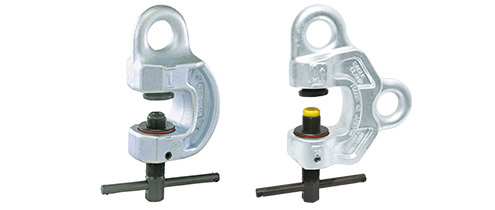
- ・Do not clamp in a direction such as side clamping, where the load does not apply force for the cam's clamping to the shackle.
- ・Do not use the clamp for the following types of lifting:
(combined lifting, lifting with pads, lifting at different levels, lifting side by side, and side clamping lifting)
Never Attach Directly to Lifting Holes

Precautions and Actions
For slinging work involving lifting holes in lifting pieces, use a hook-equipped chain sling.
- ・Do not insert the cam of the clamp into a lifting hole to lift a load.
Handling of Irregularly Shaped Loads

Reason
Swaying or movement of the load during lifting may cause it to shift or the clamp to come off.
When lifting with an offset center of gravity, the load applied to each clamp may exceed half the total weight of the load.
Precautions and Actions
For two-point lifting, use lifting pieces or screw-type clamps (Model SBN or SBB).
- ・Use two or more clamps when lifting or transporting irregularly shaped loads, and pay close attention to off-center loading.

Reason
When turning over irregularly shaped loads, the landing surface may be unstable, so be especially careful as the load may tip over.
- ・When placing irregularly shaped loads, always use a stopper to prevent them from tipping over.
Handling in Chemical Environments

Reason
Exposure to chemical environments can cause corrosion of critical clamp components, resulting in reduced strength and performance, and may also lead to stress corrosion cracking.
Precautions and Actions
Use specially designed custom clamps for chemical environments. Contact us for more information.
- ・Do not use the clamp in acidic or alkaline solutions, or in atmospheres containing such chemicals.
Handling in the Water

Reason
When handling loads that are placed into or located in oceans or rivers, there is a high risk of accidents due to the following factors:
■Changes in apparent weight caused by buoyancy
■Load sway caused by water flow
■Reduced visibility for workers
Precautions and Actions
Even when placing a clamped load into flowing water—for example, during river damming work—carefully consider the effects of water resistance and buoyancy.
- ・Take extra care when slinging loads that are placed into or removed from the water.
Operating Temperature

Reason
At high temperatures, the main body, cam, and swivel jaw of the clamp may soften, resulting in reduced strength and clamping ability. This can lead to damage to the clamp and may cause it to drop the load.
At low temperatures, the surface of the load may freeze, which may cause it to slip and drop the load.
Precautions and Actions
If using the clamp at temperatures exceeding 150°C cannot be avoided, please contact our sales office.
Also, please contact our sales office before using the clamp in environments below -20°C.
- ・Do not use the clamp for slinging high-temperature loads that may cause the temperature of the clamp to exceed 150°C.
- ・Avoid using the clamp in environments where the temperature is below -20°C.
Hardness of the Load

Reason
If the load is too hard, the teeth of the cam or swivel jaw may not bite into the surface, and the clamp may not hold the load sufficiently. This may cause the load to shift or slip, which is dangerous.
On the other hand, if the load is too soft or weak, the cam or swivel jaw may bite through the load, or the load may break under its own weight.
Precautions and Actions
Applicable load materials: Steel and non-ferrous metals with a hardness of HV85 to HV320.
If using the clamp with loads exceeding HV320 is unavoidable, please contact our sales office.
- ・Do not use the clamp on loads that are too hard or brittle.
- ・If the load is too soft or weak, it may be damaged, deformed, or dropped.
Precautions After Clamp Removal

Reason
After operation, when the crane hook is lifted, the clamp may catch on the load or adjacent objects, which may cause tipping over.
Precautions and Actions
To prevent the load from tipping over, always apply stabilizing measures before removing the clamp.
- ・Handle the removed clamp carefully to prevent it from catching on the load again or hitting adjacent objects.
Prohibition of Combined Lifting

Reason
The proper function of the clamp depends on the cam and the pivoting jaw, which must bite directly into both surfaces of the load.
If multiple plates are clamped together or a pad is inserted between the clamp and the load, the cam may not bite sufficiently, which may result in reduced clamping force.
- ・Combined lifting and lifting with pads are prohibited.
Prohibition of Lifting Side by Side and at Different Levels

Reason
In lifting the load at different levels, the operator may have to work under the suspended load, which is dangerous.
In lifting the load side by side, the clamps may touch each other, which can cause the load to come off.
Precautions and Actions
Do not lift two or more plates with a single crane hook.
- ・Do not lift loads side by side or at different levels.
Vertical Lifting of Steel Pipes

Reason
If the clamp is attached with the swivel jaw facing inward, it may not make proper contact with the surface due to its geometry.
This prevents the teeth from biting into the load sufficiently, making vertical lifting unsafe.
Precautions and Actions
When using Model E or Model SL clamps to lift round steel pipes vertically, refer to the instruction manual for “Clamps for Steel (for Vertical Lifting)" to confirm the minimum allowable pipe diameter.
- ・When lifting round pipes vertically, always attach the clamp with the cam facing inward.
Operation in Strong Winds

Reason
Strong winds can cause the suspended load to sway or collide with adjacent objects, leading to a loss of balance and potentially resulting in the load falling.
Precautions and Actions
Even if winds at ground level are not strong, unexpected strong winds may occur at height. Always exercise caution.
Refer to Article 31‑2 of the Japanese Safety Ordinance for Cranes.
- ・Do not use clamps in strong wind conditions.
Never Lift Steel Sheet Piles

Reason
The ends of steel sheet piles often have complex shapes, and if an unsuitable clamp is used, it may come loose and cause an accident.
When pulling out driven steel sheet piles, impact forces may overload the clamp, resulting in deformation or damage, which is extremely dangerous.
Precautions and Actions
When lowering and placing long steel sheet piles, they may be unstable at landing, and the clamp may come off, which is dangerous.
Use the screw-type clamp (Model SBB).
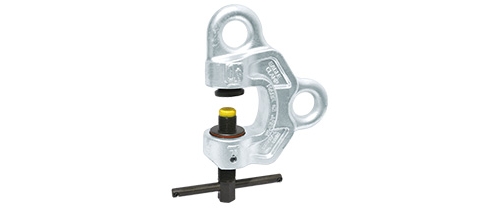
- ・Use a dedicated clamp when lifting or transporting long steel sheet piles.
- ・For pulling out steel sheet piles, use a dedicated clamp or a clamp suitable for the operation.
Lifting with an Excavator

Reason
It is prohibited to perform rigging work by hooking a chain sling directly onto the bucket teeth of an excavator.
Precautions and Actions
Strict compliance with Article 164 of the Industrial Safety and Health Regulations and Notification No. 542 by the Labour Standards Bureau are required.
- ・When using an excavator, do not attach the clamp or sling directly to the bucket teeth.
Connection with Attachment Sling

1: Use Two Separate Slings When Attaching Two Clamps
Reason
Do not attach two clamps to a single sling (chain sling or wire rope).
If the sling slips, the load may become unbalanced in distribution, placing excessive force on one clamp or sling, which could result in damage or a dropped load.
Precautions and Actions
Refer to Article 213 of the Japanese Safety Ordinance for Cranes.
- ・Use only slings suitable for slinging operations when attaching them to clamps.

2: Always Use Proper Fittings When Connecting Slings to Clamps
Reason
Do not insert a sling (chain sling or wire rope) directly into the lifting shackle of the clamp.
The edge of the shackle severely damages the sling.
Precautions and Actions
Use suitable connecting fittings for slinging work.
- ・Do not attach a sling (chain sling or wire rope) directly to the clamp.
Use of a Lifting Beam

1: When the lifting span is wide
Reason
If the long loads are lifted without a lifting beam, the sling angle and the clamp mounting angle are large, which is dangerous.
With a lifting beam, the clamp mounting angle is close to vertical, the engagement depth increases, and lifting becomes safer.
Precautions and Actions
Confirm the mechanism and Working Load Limit (WLL) of the lifting beam.
- ・When lifting long loads, use a lifting beam to keep the clamp mounting angle close to vertical.

2: When Lifting with Multiple Points
Reason
With multiple lifting points, different length slings or an unbalanced load can result in a concentrated load on one of the lifting points.
This may cause overload at that point, leading to clamp damage or dropping of the load.
Precautions and Actions
When lifting a load with low rigidity and not enough lifting points for its length, the load may deflect.
As a result, the clamp may twist and come off, which is dangerous.
With more than four lifting points, make sure the load is evenly distributed.
Using equalizers or block loaders is recommended.
The required capacity per clamp (WLL) can be estimated using the following formula:
where:
WLL = L / (N - 2)
WLL: required capacity per clamp
L: total load mass
N: number of lifting points
- ・A lifting beam with multiple points, ensure the slings do not cause unbalanced loading.
Handling of Clamps

Reason
Impact can damage the main body of the clamp and the lock device, which may lead to malfunction.
- ・Do not drop or drag the clamp.
Never Modify the Clamps

Reason
Heating the clamp causes a microstructural change in its material, which makes it harder and more brittle, leading to breakage.
- ・Never modify the clamp or its accessories.
- ・Do not weld or heat the clamp or its accessories.
Never Weld on a Suspended Load

Reason
If the grounding is incomplete, welding can damage components such as the cam, swivel jaw, chain sling, or wire rope.
Precautions and Actions
If welding is necessary, use an insulated hook and ensure proper grounding to prevent electric leakage.
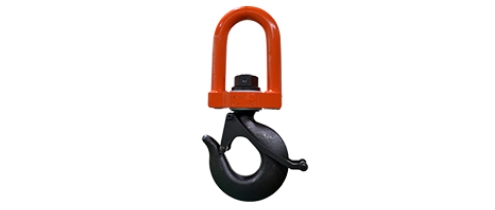
- ・Do not weld while the load is suspended.
Prohibition of Shot Blasting

Reason
The clamp or a chain sling or a wire rope may be damaged, resulting in a hazardous condition.
- ・While the clamp is attached, shot blasting is prohibited.
Never Use Clamps not Properly Maintained

Reason
During pulling over or landing operations, the load on the clamp may be reduced. This can cause a loss of clamping force, and the load may slip and fall.
Precautions and Actions
Inspect the clamp before operation.
If any abnormalities are found, do not use the clamp. Disassemble and inspect it, clean or replace components, or send it to us (or your dealer) for repair.
For inspection criteria and other details, refer to the "inspection manual" in the instruction manual.
- ・Do not use clamps with any of the following issues:
– Worn, clogged, or chipped teeth on the cam or swivel jaw
– Loss of spring function

Reason
If the main body of the clamp is damaged, the lifting shackle pin may come off the guide groove, causing malfunction, and the load may slip and fall.
Precautions and Actions
Inspect the clamp before operation.
If any abnormalities are found, do not use the clamp. Disassemble and inspect it, clean or replace components, or send it to us (or your dealer) for repair.
For inspection criteria and other details, refer to the "inspection manual" in the instruction manual.
- ・Do not use clamps with any of the following issues in the main body of the clamp:
– Increase or decrease in body thickness
– Deformation of the body
– Wear of the guide groove
User Registration Request

For proper maintenance and our appropriate support, we request user registration for all our products.
Please let us know the name of your dealer and the serial number listed on the "Certificate of Inspection and Test" at export@eagleclamp.co.jp.
- ・User registration is important data for maintenance. Please be sure to register your information.
